

Beyond Verbal Disclosure: Identifying Trauma in Voice and Body

Dr. Corey Petersen, Psychotherapist

Beyond Verbal Disclosure: Identifying Trauma in Voice and Body

About the expert

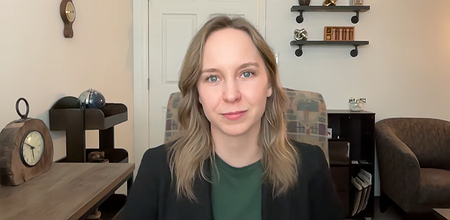
Picture of Corey Petersen
Dr. Corey Petersen is a clinical psychotherapist who brings a distinctive lens to trauma-informed practice through her dual expertise in psychotherapy and communication science. She earned her Ph.D. in Communication Studies from the University of Kansas, where her research focused on psychotherapeutic language and communication ethics, alongside dual Master's degrees in Marriage and Family Therapy and Professional Communication.
Dr. Petersen's clinical work centers on helping survivors of trauma, with particular expertise in identifying implicit trauma markers through paralinguistic and nonverbal assessment. Her integration of communication theory with therapeutic practice allows her to train clinicians in recognizing what clients communicate beyond their wordsβ€”through voice quality, body signals, and linguistic patterns that reveal autonomic nervous system states.
As owner of Communication and Connection Therapy, Dr. Petersen maintains an active clinical practice while serving as a continuing education trainer and corporate communication consultant. With over nine years of collegiate teaching experience spanning communication and psychology departments, she excels at translating complex research into immediately applicable clinical skills. Her published research and training programs bridge neuroscience, polyvagal theory, and communication science to enhance clinicians' observational precision in trauma assessment.
Dr. Petersen is recognized for making sophisticated theoretical frameworks accessible to practicing clinicians, helping mental health professionals develop refined attunement capacities that standard verbal-focused training often overlooks.
More →

Learning objectives

  1. Identify verbal and nonverbal communication patterns commonly seen in trauma survivors, including paralinguistic markers
  2. Analyze the role of humor and other coping strategies in trauma narratives
  3. Assess the impact of the therapist’s affect on the processing of trauma narratives and therapeutic outcomes

Learning material

A theoretical course illustrated with clinical examples. This course consists of videos of 5 to 15 minutes each. The course PowerPoint is available for download.

Syllabus

Soon...


CE Credits

Download a certificate of successful completion.


Audience

This course is intended for all mental health professionals.

Registration

  • 6h of continuing education
  • 1 bibliography (APA)
  • 1 final evaluation
  • 1 certificate of completion
  • 7-day money back guarantee
  • Unlimited access

Legal notice

The courses offered by ASADIS are accredited by different professional organisations. In addition, ASADIS is approved by the Canadian Psychological Association to offer continuing education for psychologists. ASADIS maintains responsibility for the program.

The CPA’s approval of an individual, group, or organization as a CE Sponsor or Provider is restricted to the activities described in the approved application or annual report form. The CPA’s approval does not extend to any other CE activity the Sponsor or Provider might offer. In granting its approval, the CPA assumes no legal or financial obligations to Sponsors, Providers, or to those individuals who might participate in a Sponsor or Provider’s CE activities or programs. Further, responsibility for the content, provision, and delivery of any CE activity approved by the CPA remains that of the CE Sponsor or Provider. The CPA disclaims all legal liability associated with the content, provision, and delivery of the approved CE activity.

Want to know when new courses are available?

Sign up to our mailing list →


Upon joining, you'll receive a 25% welcome promo code, and you can always unsubscribe at any time!


Find us on: LinkedIn   Facebook   Instagram