Mindfulness-integrated Cognitive Behaviour Therapy: A transdiagnostic approach for crisis intervention, chronic conditions and relapse prevention

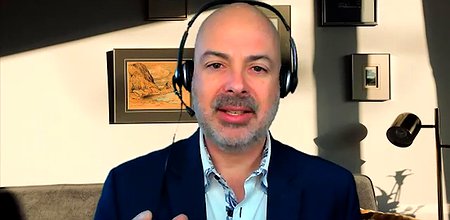
Dr. Bruno Cayoun, Psychologist

Master the transdiagnostic protocol integrating neuroscience, CBT and Burmese Vipassana tradition for lasting emotion regulation and relapse prevention.

Overview

It is now well established across affective neuroscience that most mental health disorders share a reduced ability to perceive the subtle bodily sensations from which emotions emerge. When these early signals go undetected, emotion regulation weakens and reactivity rises. Since interoception operates upstream of cognition, not feeling body sensations makes change harder and relapse more likely.

To help you address this challenge with your clients, Dr. Bruno Cayoun, a clinical and research psychologist, has developed an approach that integrates contemporary Western psychology and neuroscience with over 2,500 years of Buddhist phenomenological psychology, specifically the systematic body-scanning practice of the Burmese Vipassana tradition. It is called Mindfulness-Integrated Cognitive Behaviour Therapy (MiCBT).

Where most mindfulness-based therapies rely on open-monitoring attention, MiCBT directly trains the interoceptive capacity at the heart of emotional regulation.

The course will teach you how to deliver it across a full range of clinical presentations. It is structured around MiCBT's four stages: Personal (attention and emotion regulation), Exposure (addressing avoidance), Interpersonal (relational effectiveness), and Empathic (compassion and ethics).  

Over ten weeks, you will develop competency in applying the Co-Emergence Model of Reinforcement — a neurophenomenological framework that describes psychological distress as a craving for pleasant body sensations and an aversion to unpleasant ones, both co-arising with unhelpful thoughts.

You will learn evidence-based practices including progressive muscle relaxation, mindfulness of breath, body scanning in the vipassana tradition, advanced scanning methods, mindfulness-based exposure techniques, equanimity training, mindfulness-based interpersonal communication skills, and compassion meditation to help prevent relapse.  
 
The course combines theoretical understanding of MiCBT's mechanisms with practical application, so that you can deliver this integrated approach across a wide range of disorders, including generalised and phobic anxiety, depression, OCD, PTSD, chronic pain, and emotion dysregulation.

Special emphasis is placed on the critical role of daily mindfulness practice as the foundation for rapid and lasting therapeutic change, maintained by the resulting neuroplasticity, and on understanding how to motivate client commitment through Socratic dialogue and cognitive reappraisal. 

By course completion, you will be able to assess client suitability for MiCBT, structure and deliver all four stages of the program, manage common implementation challenges, and integrate MiCBT principles into their clinical practice. Audio guides for mindfulness practices are provided.

Download the program

  • 11h30 of continuing education
  • 78 lessons that last from 5 to 15 minutes each
  • 1 PowerPoint
  • 1 bibliography (APA)
  • 1 final evaluation
  • 1 certificate of completion
  • 7-day money back guarantee
  • Unlimited access

About the expert

Picture of Bruno Cayoun
Dr Bruno Cayoun is a clinical and research psychologist and developer of Mindfulness-integrated Cognitive Behaviour Therapy (MiCBT). He is the founder and Director of the MiCBT Institute, a leading provider of MiCBT training and professional development to mental health services and professional associations internationally since 2003. He maintains a private practice in Hobart, Australia, undertakes mindfulness research at the MiCBT Institute, and regularly cooperates on mindfulness-based research with various universities in Australia and abroad. 

Dr. Cayoun is the developer of the Co-Emergence Model of Reinforcement (CMR), a neurophenomenological framework that explains the mechanisms underlying intrusive thoughts, emotion dysregulation, and the therapeutic mechanisms of mindfulness meditation. His work bridges classical cognitive-behavioural therapy with contemporary neuroscience and Buddhist psychology, offering clinicians a unified theoretical understanding of how psychological disorders develop and how they can be effectively treated.

Dr Cayoun is the author and co-author of five books on MiCBT and his research has been published in leading peer-reviewed journals. His mindfulness training audio instructions are used worldwide in various languages, and he is the principal developer of validated and widely-used questionnaires, including the Short Progress Assessment, the Mindfulness-based Self Efficacy Scale, and co-developer of the Equanimity Scale-16.

Beyond clinical psychology research and practice, Dr. Cayoun maintains a deep engagement with Buddhist psychology and contemplative practice. He practises mindfulness meditation in the Burmese Vipassana tradition of Ledi Sayadaw, U Ba Khin and S. N. Goenka and has undergone intensive training in France, Nepal, India, and Australia since 1989. This unique integration of Western psychology, neuroscience, and Buddhist epistemology positions him as a leader in the third-wave cognitive-behavioural therapy movement and a voice for transdiagnostic, mechanistically-informed treatment.

More →

Learning objectives

  1. Understand the theoretical foundations of MiCBT, including the distinction between mindfulness and attention, the Co-Emergence Model of Reinforcement and how it differs from operant conditioning, and how MiCBT is transdiagnostic in application, as demonstrated by achieving 80% accuracy or higher on a knowledge assessment covering these concepts.
  2. Implement all four stages of the MiCBT program (Personal, Exposure, Interpersonal, and Empathic) with appropriate sequencing, including teaching progressive muscle relaxation, mindfulness of breath, body scanning, mindfulness-based exposure techniques, and compassion practices.
  3. Analyse the mechanisms of emotional regulation through interoceptive desensitisation and equanimity training, and understand how these processes lead to behavioural change and relapse prevention.
  4. Recognise and manage common clinical challenges in MiCBT implementation (such as avoidance of practice, insufficient commitment, emotional flooding, and relapse) and adapt the protocol flexibly while maintaining treatment integrity

Learning material

A theoretical course illustrated with clinical examples. This course consists of videos of 5 to 15 minutes each. The course PowerPoint is available for download.

Syllabus

  • PowerPoint
  • 1. Introduction
  • Week 1

  • 2. Introduction to MiCBT
  • 3. What is Mindfulness
  • 4. Mechanisms of Action and Definition
  • 5. Do we need to meditate
  • 6. The Co-Emergence Model of Reinforcement
  • 7. Experiencing Information Part I
  • 8. Experiencing Information Part II
  • 9. System in Disequilibrium
  • 10. Stage 1: Intrapersonal Regulation
  • 11. Week 1: Home Practice
  • Week 2

  • 12. Rationale for Mindfulness of Breath (in MiCBT)
  • 13. Practice of Mindfulness of Breath Part I
  • 14. Practice of Mindfulness of Breath Part II
  • 15. Operationalising Distractibility Neurophenomenological Mechanisms
  • 16. The Self-Organisation of Thought Intrusion
  • 17. Applied Practice
  • 18. Week 2: Home Practice
  • Week 3

  • 19. Rationale for Mindfulness of Body Sensations Part I
  • 20. Rationale for Mindfulness of Body Sensations Part II
  • 21. Emphasis on Interoception Part I
  • 22. Emphasis on Interoception Part II
  • 23. Experiential Delivery of the Rationale with Client-Patient
  • 24. Practice of Unilateral Body Scanning
  • 25. Week 3: Home Practice
  • 26. Week 3 Demonstration Video 1: Immediate pain reduction in chronic PTSD
  • 27. Week 3 Demonstration Video 2: Treatment engagement by offering a sound rationale for body scanning
  • Week 4

  • 28. Neuroplasticity: Accounting for Change
  • 29. Neuroplasticity: Research
  • 30. Interoceptive Networks and Body Scanning
  • 31. Applying Interoceptive Awareness and Equanimity
  • 32. Trials and Data
  • 33. Week 4: Home Practice
  • 34. Week 4 Demonstration Video 3: Panic Disorder and Trauma
  • Week 5

  • 35. Advanced Scanning
  • 36. Symmetrical Scanning
  • 37. Externalising Skills and Exposure
  • 38. Exposure Preparation: SUDS List
  • 39. Stage 2 of MiCBT: Exposure Skills
  • 40. Why two days
  • 41. Week 5: Home Practice
  • 42. Week 5 Demonstration Video 4: Stage 2 Exposure Stage
  • Week 6

  • 43. Partial Sweeping: Procedure
  • 44. Rationale for Sweeping Techniques
  • 45. Review of SUDS Scores: Avoidant Personality Disorder
  • 46. Review of SUDS Scores: Generalised Anxiety Disorder & Major Depression
  • 47. Review of SUDS Scores- Social Anxiety Disorder & Alcohol Abuse
  • 48. MiCBT Guide App: Reviewing Exposure
  • 49. Week 6: Home Practice
  • Week 7

  • 50. Sweeping en Masse
  • 51. A Twofold Purpose
  • 52. Common Experiences
  • 53. Interpersonal Mindfulness
  • 54. Experiential Ownership: “Seeing Suffering”
  • 55. Week 7: Home Practice
  • 56. Week 7 Demonstration Video 5: Mindfulness training in Parkinson
  • Week 8

  • 57. Transversal Scanning
  • 58. Purpose
  • 59. Common Experiences
  • 60. Assertive Communication: Process
  • 61. 7 Statements of Assertiveness: Example
  • 62. Theory Congruence
  • 63. Week 8: Home Practice
  • Week 9

  • 64. Sweeping in Depth
  • 65. Common Experiences
  • 66. What is Compassion
  • 67. Compassion & Preventing Relapse
  • 68. Compassion & Preventing Relapse Part I
  • 69. Compassion & Preventing Relapse Part II
  • 70. Ethics as Rules and Ethics as Compassion
  • 71. Week 9: Home Practice
  • Week 10

  • 72. Maintenance Practice: Maintaining Well-being & Personal Growth
  • 73. Maintenance Practice: Maintaining Well-being & Personal Growth Part I
  • 74. Maintenance Practice: Maintaining Well-being & Personal Growth Part II
  • 75. Addressing Crisis Part I
  • 76. Addressing Crisis Part II
  • 77. Week 10: Home Practice
  • 78. Conclusion
  • Bibliography


CE Credits

Download a certificate of successful completion.


Audience

This course is intended for all mental health professionals.

Registration

  • 11h30 of continuing education
  • 78 lessons that last from 5 to 15 minutes each
  • 1 PowerPoint
  • 1 bibliography (APA)
  • 1 final evaluation
  • 1 certificate of completion
  • 7-day money back guarantee
  • Unlimited access

Legal notice

The courses offered by ASADIS are accredited by different professional organisations. In addition, ASADIS is approved by the Canadian Psychological Association to offer continuing education for psychologists. ASADIS maintains responsibility for the program.

The CPA’s approval of an individual, group, or organization as a CE Sponsor or Provider is restricted to the activities described in the approved application or annual report form. The CPA’s approval does not extend to any other CE activity the Sponsor or Provider might offer. In granting its approval, the CPA assumes no legal or financial obligations to Sponsors, Providers, or to those individuals who might participate in a Sponsor or Provider’s CE activities or programs. Further, responsibility for the content, provision, and delivery of any CE activity approved by the CPA remains that of the CE Sponsor or Provider. The CPA disclaims all legal liability associated with the content, provision, and delivery of the approved CE activity.

Want to know when new courses are available?

Sign up to our mailing list →


Upon joining, you'll receive a 25% welcome promo code, and you can always unsubscribe at any time!


Find us on: LinkedIn   Facebook   Instagram