- Review the research findings that clinicians should know in order to make informed clinical decisions
- Enable clinicians to build a strong alliance when using videoconferencing to deliver psychotherapy
- Understand the ethical implications of videoconference psychotherapy and the limitations of such interventions
- Understand the importance of telepresence when delivering psychotherapy via videoconferencing
Improving the effects of psychotherapy offered through videoconferencing
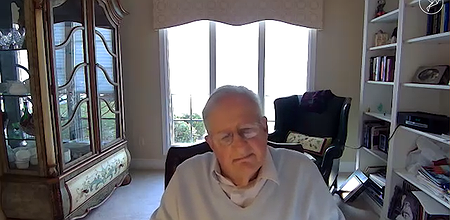
Prof. Stéphane Bouchard, Psychologist
Master evidence-based telepsychotherapy: build stronger alliances, cultivate telepresence, and achieve clinical outcomes equal to face-to-face therapy.
Overview
Therapeutic presence operates differently through a screen. Research reveals a surprising finding: the subjective experience of "being together" in videoconferencing predicts alliance strength more powerfully than technical quality or visual clarity. This challenges foundational assumptions about how connection forms in psychotherapy. What clinicians perceive as barriers—physical distance, mediated communication, environmental intrusions—patients often experience as manageable when telepresence is deliberately cultivated.
In this course, you will learn to ground clinical decisions in robust empirical evidence. Prof. Stéphane Bouchard synthesizes two decades of controlled research demonstrating non-inferiority of videoconferencing psychotherapy across anxiety disorders, major depression, and PTSD. You will examine how to build strong therapeutic alliances remotely, integrate telepresence as a clinical variable, and navigate the ethical and technical landscape with confidence.
You will deepen understanding of evidence-based domains that determine remote therapy outcomes:
- Research findings on efficacy, effectiveness, and current knowledge limitations across diagnostic populations
- Technology selection criteria grounded in security standards, end-to-end encryption protocols, and jurisdictional compliance requirements
- Environmental management strategies for both clinician and patient spaces that protect confidentiality while enhancing therapeutic engagement
- Telepresence cultivation techniques, including camera positioning, emotion induction methods, and alliance-building practices specific to videoconferencing
You will strengthen capacity to assess when remote intervention is clinically indicated and when face-to-face contact remains essential. The course addresses techno-anxiety in both patients and professionals, offering concrete strategies to increase self-efficacy with unfamiliar modalities. Prof. Bouchard demonstrates how to adapt exposure-based interventions, experiential exercises, and cognitive techniques to the videoconferencing format without compromising treatment integrity.
You will implement practical protocols for session management, including pre-session planning, communication backup systems, and handling technical disruptions mid-session. The training covers regulatory considerations across jurisdictions and provides frameworks for documenting clinical reasoning when selecting remote modalities. Case examples illustrate successful adaptation of therapeutic techniques—from interoceptive exposure to mindfulness training—within patients' natural environments.
These evidence-based skills will enable you to deliver psychotherapy remotely with the same clinical rigor expected in face-to-face practice. You will make informed decisions about technology platforms, environmental setup, and patient selection based on research rather than assumption. The capacity to cultivate telepresence deliberately will strengthen therapeutic relationships regardless of physical distance, expanding access while maintaining treatment quality.
On sale until April 10!
- 3h30 of continuing education
- 19 lessons that last from 5 to 15 minutes each
- 1 certificate of achievement
- 1 power-point
- 1 bibliography
- 1 course evaluation
- 7-day money back guarantee
- Unlimited access
- 92% of participants who completed the satisfaction survey declare they would recommend this course to a colleague
Accreditation

Ordre des Psychologues du Québec

Canadian Psychological Association

Canadian Counselling and Psychotherapy Association

Collège des médecins du Québec
For physicians who practice psychotherapy, training recognized by the Ordre des psychologues du Québec is automatically considered as activities adopted by the Collège des médecins, in accordance with Article 3 of the Regulation.
For physicians who do not practice psychotherapy, the College evaluates each recognition request based on the following criteria:
- the relevance of the activity to the practice of the profession
- the skills and experience of the trainer
- the quality of the content and its adequacy with the physician's practice
- the pedagogical framework of the activity
- the quality of the documentation provided
- compliance with the training objectives set out in the regulation
- the presence of a certificate of participation or an evaluation
About the expert

Prof. Stéphane Bouchard is Canada Research Chair in Clinical Cyberpsychology and full professor of clinical psychology at the University of Quebec in Outaouais. As a registered psychologist and scientist-practitioner, he has dedicated over two decades to developing clinically useful interventions and conducting rigorous research on telepsychotherapy and virtual reality treatments for anxiety disorders, PTSD, pathological gambling, and other mental health conditions.
Prof. Bouchard pioneered research on telepresence in videoconferencing psychotherapy, demonstrating that the subjective experience of "being together" remotely predicts therapeutic alliance strength more powerfully than technical quality. His randomized controlled trials have established non-inferiority of telepsychotherapy across panic disorder, generalized anxiety disorder, PTSD, and major depression, with very large effect sizes maintained at 12-month follow-up.
His research program encompasses treatment efficacy studies, experimental investigations of therapeutic mechanisms, technology security protocols, and ethical frameworks for remote intervention. Prof. Bouchard has published extensively on alliance-building in virtual contexts, environmental management strategies, and patient selection criteria for videoconferencing modalities.
He has received numerous distinctions including the prestigious Adrien Pinard Prize for significant contributions to psychology. Prof. Bouchard's work bridges rigorous empirical research with practical clinical application, providing mental health professionals with evidence-based protocols for delivering psychotherapy remotely while maintaining the therapeutic rigor expected in face-to-face practice.
Learning objectives
Learning material
This workshop includes theory as well as clinical examples. It includes videos ranging from 5-15 minutes in length. The PowerPoint of the workshop can be downloaded.
Syllabus
- PowerPoint
- 1. Presentation
-
Telepresence
- 2. The basics of telepresence and improving Visioconference psychotherapy (VCP)
- 3. VCP in relation with panic disorder
- 4. VCP in relation to general anxiety disorder and post traumatic stress disorder
- 5. VCP in relation to major depression, eating disorders, and a summary of the published data
-
Questions related to effectiveness and conclusive data
- 6. Limitations of studies and knowledge on VCP
-
Technology challenges
- 7. VCP and technological challenges
- 8. Good habits to take regarding technology
-
Challenges related to the physical environment
- 9. VCP and the challenges related to physical environment
- 10. Habits and strategies to best handle technology
-
Techno-anxiety of clients and professionals: reducing clients’ and professionals’ apprehensions
- 11. Techo-anxiety and the relationship between the professional and VCP
-
Self-efficacy of professionals
- Issues related to the therapeutic alliance
- 12. VCP and therapeutic alliance
- 13. Studies on VCP and therapeutic alliance
- 14. Meta-analysis of the relationship between VCP and therapeutic alliance
- 15. Practical advice to build a strong therapeutic alliance with VCP
- 16. Healthy habits in relation to VCP
- Legislative issues
- 17. The legal issues of VCP
- 18. Contraindications in relation to VCP
-
Conclusion
- 19. Conclusion
- Bibliography
CE Credits
Download a certificate of successful completion.
Audience
This training is intended for mental health professionals.
Registration
Ask a question
Do you have a question? Then email us at contact@asadis.net
Frequently asked questions
-
Is there an evaluation at the end of the course?
To validate the achievement of the learning objectives, a final evaluation in the form of true/false questions is required. It must be completed in order to obtain the certificate of completion.
In addition, an optional self-assessment is offered at the beginning and end of the course, allowing you to measure your progress on the targeted skills.
These evaluations are not graded and are intended primarily to support your professional reflection.
-
I have a disability. Can I receive specific support?
Yes! This training is offered as a pre-recorded video format, without subtitles. If you have a disability, we can provide an adapted alternative (technical assistance for viewing or individual supervision). For any request, please contact our disability coordinator at the following address: contact@asadis.net
-
How long do I have access to the course?
After your registration, the course is accessible anytime and from anywhere with unlimited access.
-
When does the course start?
That is entirely up to you! When you buy a course, you'll receive an access link that you can activate when you want.
-
Is there a student rate?
Yes there is! To learn more, email us at contact@asadis.net.
You may also be interested in:


Legal notice
The courses offered by ASADIS are accredited by different professional organisations. In addition, ASADIS is approved by the Canadian Psychological Association to offer continuing education for psychologists. ASADIS maintains responsibility for the program.
The CPA’s approval of an individual, group, or organization as a CE Sponsor or Provider is restricted to the activities described in the approved application or annual report form. The CPA’s approval does not extend to any other CE activity the Sponsor or Provider might offer. In granting its approval, the CPA assumes no legal or financial obligations to Sponsors, Providers, or to those individuals who might participate in a Sponsor or Provider’s CE activities or programs. Further, responsibility for the content, provision, and delivery of any CE activity approved by the CPA remains that of the CE Sponsor or Provider. The CPA disclaims all legal liability associated with the content, provision, and delivery of the approved CE activity.