Working with Attachment Style in Psychotherapy

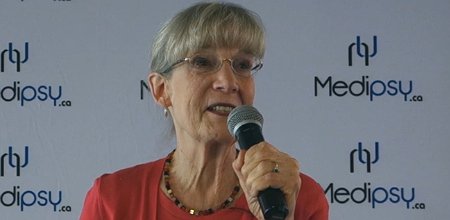
Dr. Gail Myhr, Associate professor of psychiatry

Integrating attachment strategies to strengthen alliance and outcomes

Overview

Attachment looks intuitive until it enters the consulting room. The same patient can present as fiercely independent one week and desperately seeking proximity the next, and what reads as resistance may in fact be a deactivating strategy with deep developmental roots. Attachment theory offers a precise framework for these shifts, yet its clinical application requires careful assessment, cultural sensitivity, and sustained self-reflection from the therapist.
This training brings together the empirical foundations of attachment research and the practical demands of psychotherapy. Drawing on Bowlby, Ainsworth, Main, and contemporary developmental science, the course examines how internal working models shape adult relational patterns. It also addresses how those patterns manifest in the therapeutic alliance itself.
You will learn to elicit attachment history through structured clinical interviewing, exploring both childhood caregiving and current relational dynamics. The training clarifies how to differentiate dismissive, preoccupied, and disorganized presentations using validated tools such as the AAI and ECR-R.
Throughout the course, the focus shifts to clinical application:
  • Identify deactivating and hyperactivating strategies in session
  • Differentiate secure base from safe haven functions
  • Implement goal-corrected empathic attunement
Recognize cultural variation without pathologizing difference
You will also examine how your own attachment orientation influences countertransference, alliance ruptures, and therapeutic stance. The framework extends to intergenerational transmission, parenting work, and the developmental origins of psychopathology across the lifespan.
The skills acquired translate directly into sharper case formulation, more responsive interventions, and a therapeutic relationship capable of fostering earned security. Attachment-informed practice becomes a working compass for navigating complex relational presentations with greater clinical precision.

Download the program

  • 2h of continuing education
  • 17 lessons that last from 5 to 15 minutes each
  • 1 certificate of achievement
  • 1 PowerPoint
  • 1 bibliography
  • 1 course evaluation
  • 7-day money back guarantee
  • Unlimited access
  • 97% of participants who completed the satisfaction survey declare they would recommend this course to a colleague

About the expert

Picture of Gail Myhr

Gail Myhr, MD, CM, MSc, FRCPC, is Associate Professor of Psychiatry at McGill University and staff psychiatrist at the McGill University Health Centre. A cognitive-behavioural therapist with extensive clinical experience, she is a Fellow of the Royal College of Physicians and Surgeons of Canada, a Diplomate of the Academy of Cognitive Therapy, and a Founding Member of the Canadian Association of Cognitive and Behavioural Therapies.

In 2021, Dr. Myhr was named Fellow of the Canadian Association of Cognitive and Behavioural Therapies, recognizing her distinguished contributions to CBT science, practice, training, and advocacy in Canada. Her clinical and research interests include patient suitability for short-term CBT, attachment-informed interventions in CBT, evidence-based CBT supervision, and CBT for psychosis, including Avatar Therapy.

More →

Learning objectives

  1. Learn the principles of attachment theory, as it applies across the life cycle
  2. Elicit information on history to establish the predominant attachment style of their patient
  3. Know their own attachment style and recognize how that might affect session process
  4. Use their knowledge of attachment to intervene in therapy to optimize outcomes

Learning material

A theoretical course illustrated with clinical examples. This course is composed of videos of 5 to 15 minutes each. The PowerPoint of the course to download.

Syllabus

  • PowerPoint
  • 1. Introduction
  • Foundations of Attachment Theory

  • 2. What Is Your Attachment Style
  • 3. What Is Attachment
  • 4. Principles of Attachment Theory
  • 5. Measuring Attachment in Infants and Children
  • 6. Attachment Measurement in Adults
  • 7. Attachment Over the Life Span
  • Clinical Application and Case WorkRecognizing your patient’s attachment style

  • 8. Recognizing your patient’s attachment style
  • 9. Attachment & Psychotherapy
  • 10. Working with Attachment
  • 11. Case Example- Dismissive Avoidant Patient
  • 12. Case Example- Preoccupied Patient
  • 13. Working with Disorganized Patient
  • 14. Therapy Outcome & Patient Attachment Style
  • 15. Therapist Attachment Style- Part 1
  • 16. Therapist Attachment Style- Part 2
  • 17. Conclusion
  • Bibliography


CE Credits

Download a certificate of successful completion.


Audience

This course is intended for mental health professionals.

Your comments

"Dr. Myhr is an excellent presenter and teacher. She is thorough and gives good case examples, which make the material come alive. This course will help me in my practise."
A social worker (Canada)

"I appreciated the way the course was presented - in sections that were easy to follow."
A psychologist (Canada)

"Many thanks for this training! A good reminder of the basics of attachment with a very relevant clinical focus. The clinical examples provided were very complete, I would have taken more." (automatically translated)
A psychologist

Registration

  • 2h of continuing education
  • 17 lessons that last from 5 to 15 minutes each
  • 1 certificate of achievement
  • 1 PowerPoint
  • 1 bibliography
  • 1 course evaluation
  • 7-day money back guarantee
  • Unlimited access

Legal notice

The courses offered by ASADIS are accredited by different professional organisations. In addition, ASADIS is approved by the Canadian Psychological Association to offer continuing education for psychologists. ASADIS maintains responsibility for the program.

The CPA’s approval of an individual, group, or organization as a CE Sponsor or Provider is restricted to the activities described in the approved application or annual report form. The CPA’s approval does not extend to any other CE activity the Sponsor or Provider might offer. In granting its approval, the CPA assumes no legal or financial obligations to Sponsors, Providers, or to those individuals who might participate in a Sponsor or Provider’s CE activities or programs. Further, responsibility for the content, provision, and delivery of any CE activity approved by the CPA remains that of the CE Sponsor or Provider. The CPA disclaims all legal liability associated with the content, provision, and delivery of the approved CE activity.

Want to know when new courses are available?

Sign up to our mailing list →


Upon joining, you'll receive a 25% welcome promo code, and you can always unsubscribe at any time!


Find us on: LinkedIn   Facebook   Instagram