- Delineate the factors that account for change in therapy
- Apply the research about the importance of client factors and the alliance to successful outcome
- Elicit client feedback about the alliance and outcome to enable new directions in therapy and the recapturing of clients who would have otherwise not benefited
- Monitor your development as a therapist and proactively learn from your non-responding clients
What makes a great therapist? Master the factors that contribute to success in therapy
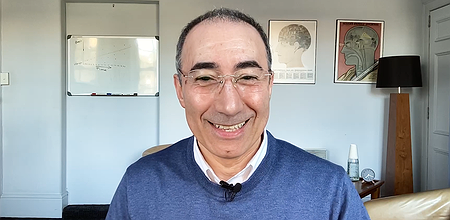
Dr. Barry L. Duncan, Psychologist. Psy. D.
Incorporate common factors in your clinical reflections to prevent burnout and improve outcomes
Overview
- How to foster your growth as a therapist and identify non-responding clients
- Common factors accounting for successful outcomes, specifically client factors and the alliance
- How to find “the heroic client” through their stories and use them to reach their goals, illustrated by case studies
- How the client’s theory of change can complement models and techniques
- Prevent drop out of your at-risk clients and recapture them with data from Outcome Rating Scale (ORS) and Session Rating Scale (SRS)
- Strategies to prevent burnout
- 3h of continuing education
- 19 lessons that last from 5 to 15 minutes each
- 1 certificate of achievement
- 1 bibliography
- 1 course evaluation
- 7-day money back guarantee
- Unlimited access
- 97% of participants who completed the satisfaction survey declare they would recommend this course to a colleague
Accreditation
Collège des médecins du Québec
For physicians who practice psychotherapy, training recognized by the Ordre des psychologues du Québec is automatically considered as activities adopted by the Collège des médecins, in accordance with Article 3 of the Regulation.
For physicians who do not practice psychotherapy, the College evaluates each recognition request based on the following criteria:
- the relevance of the activity to the practice of the profession
- the skills and experience of the trainer
- the quality of the content and its adequacy with the physician's practice
- the pedagogical framework of the activity
- the quality of the documentation provided
- compliance with the training objectives set out in the regulation
- the presence of a certificate of participation or an evaluation
About the expert
Learning objectives
Learning material
This workshop includes theory as well as clinical examples. It includes videos of 5 to 15 minutes each. The PowerPoint of the workshop can be downloaded.
Syllabus
- 1. Presentation
-
How do we get better?
- 2. Introduction to What Makes a Great Therapist
- 3. Common Factors
-
Client factors and the therapeutic alliance
- 4. Casting the Client in Heroic Roles
- 5. Sam
- 6. The Soul of Change
- 7. Reliance on the Alliance
- 8. Molly
-
The Partners for Change Outcome Management System: An antidote to wishful thinking
- 9. When the Alliance is in Trouble
- 10. Clinical vignette
- 11. Whisful Thinking
- 12. PCOMS
- 13. ORS
- 14. Clinical vignette
- 15. How not to do the SRS
- 16. Clinical vignette
- 17. Hosting Therapeutic Conversation
- 18. Therapist Growth
- 19. Conclusion
- Bibliography
CE Credits
Download a certificate of successful completion.
Audience
This training is intended for mental health professionals.
Your comments
"This was a very clear, concise and well-articulated presentation. In fact, this should be a must training for both students pursuing a therapy program as as well as practitioners regardless of their level of experience in the field. I felt that I learned about being more flexible and taking risks regarding getting out of my comfort zone!
Thanks very much!"
A psychologist (Canada)
"Greatly enjoyed this lecture and loved his approach and teachings."
A psychologist (Canada)
Registration
Ask a question
Do you have a question? Then email us at contact@asadis.net
Frequently asked questions
-
Is there an evaluation at the end of the course?
To validate the achievement of the learning objectives, a final evaluation in the form of true/false questions is required. It must be completed in order to obtain the certificate of completion.
In addition, an optional self-assessment is offered at the beginning and end of the course, allowing you to measure your progress on the targeted skills.
These evaluations are not graded and are intended primarily to support your professional reflection.
-
How long do I have access to the course?
After your registration, the course is accessible anytime and from anywhere with unlimited access.
-
When does the course start?
That is entirely up to you! When you buy a course, you'll receive an access link that you can activate when you want.
-
Is there a student rate?
Yes there is! To learn more, email us at contact@asadis.net.
You may also be interested in:
Legal notice
The courses offered by ASADIS are accredited by different professional organisations. In addition, ASADIS is approved by the Canadian Psychological Association to offer continuing education for psychologists. ASADIS maintains responsibility for the program.
The CPA’s approval of an individual, group, or organization as a CE Sponsor or Provider is restricted to the activities described in the approved application or annual report form. The CPA’s approval does not extend to any other CE activity the Sponsor or Provider might offer. In granting its approval, the CPA assumes no legal or financial obligations to Sponsors, Providers, or to those individuals who might participate in a Sponsor or Provider’s CE activities or programs. Further, responsibility for the content, provision, and delivery of any CE activity approved by the CPA remains that of the CE Sponsor or Provider. The CPA disclaims all legal liability associated with the content, provision, and delivery of the approved CE activity.