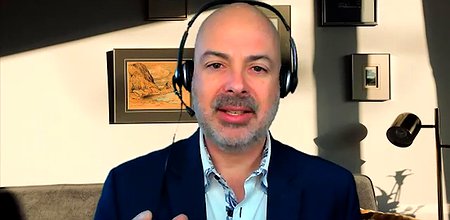
Relapse Prevention for Depression and Anxiety using CBT Strategies.

Dr. John Ludgate, Psychologist

Reduce depression and anxiety relapse by 50% using evidence-based CBT protocols and systematic risk assessment from Beck-trained expert

Overview

Successful acute treatment does not guarantee lasting recovery. Even after evidence-based CBT, approximately 30% of clients with depression or anxiety will experience symptom return within two years. This gap between short-term response and long-term outcome reveals a fundamental challenge: relapse prevention requires different clinical thinking than symptom reduction.
In this course, you will learn to reconceptualize relapse as a cognitive-behavioral process rather than disease recurrence. You will develop systematic approaches to risk assessment, integrating prevention strategies throughout treatment rather than relegating them to final sessions. Dr. Ludgate draws on longitudinal outcome research and decades of clinical practice to present protocols that address the full treatment arc.
You will deepen your understanding of empirically validated relapse predictors across depression and anxiety disorders. You will strengthen your ability to estimate individual relapse risk using client characteristics, end-of-treatment variables, and environmental factors. You will implement structured prevention protocols including early warning systems, high-risk situation planning, and cognitive rehearsal techniques. You will integrate mindfulness approaches and lifestyle modification strategies that research demonstrates reduce relapse rates by half in high-risk populations.
The course provides frameworks for individualizing maintenance planning based on risk stratification. You will learn to structure booster sessions that reinforce client autonomy rather than therapist dependence. You will develop approaches for working with clients who have relapsed, applying cognitive models to interrupt the relapse cycle. Clinical case examples illustrate risk assessment and intervention planning across varied presentations.
These skills will enable you to move beyond acute symptom management toward durable therapeutic outcomes. You will be equipped to prepare clients systematically for the highest-risk post-remission period. Your clinical practice will reflect the reality that effective CBT includes explicit preparation for challenges that emerge after formal treatment ends.


Download the program

  • 3h of continuing education
  • 21 lessons that last from 5 to 15 minutes each
  • 1 certificate of achievement
  • 1 PowerPoint
  • 1 bibliography
  • 1 course evaluation
  • 7-day money back guarantee
  • Unlimited access
  • 97% of participants who completed the satisfaction survey declare they would recommend this course to a colleague

About the expert

Picture of John Ludgate
Dr. John Ludgate is a licensed psychologist and Founding Fellow of the Academy of Cognitive Therapy, where he serves on the Credentialing Committee. He received his clinical training directly under Dr. Aaron Beck, the founder of Cognitive Therapy, at the Center for Cognitive Therapy in Philadelphia.
With over 30 years of clinical practice specializing in mood disorders, anxiety disorders, and relationship problems, Dr. Ludgate maintains an active practice at the CBT Center of Western North Carolina in Asheville while providing advanced training and supervision in Cognitive Behavioral Therapy to mental health professionals internationally.
Dr. Ludgate is the author of Maximizing Psychotherapeutic Gains and Preventing Relapse in Emotionally Distressed Clients, the seminal clinician guide that translates longitudinal outcome research into practical relapse prevention protocols. His other influential publications include CBT Couples Toolbox, Cognitive Therapy with Inpatients: Developing a Cognitive Milieu, Overcoming Compassion Fatigue: A Practical Resilience Workbook, and Heal Yourself: A CBT Approach to Reducing Therapist Distress and Increasing Therapeutic Effectiveness.
His research on predictors of long-term outcome in CBT for depression, including a landmark 5-year follow-up study of 80 depressed outpatients, has informed evidence-based approaches to risk stratification and maintenance planning. Dr. Ludgate has published extensively in peer-reviewed journals and contributed chapters to major cognitive behavioral therapy texts on relapse prevention and treatment outcome.
His presentations and workshops on CBT approaches to anxiety, depression, relapse prevention, and relationship problems have reached audiences across North America, Europe, and Asia. His clinical work focuses on translating longitudinal outcome research into systematic protocols that therapists can implement throughout the treatment arc, from acute intervention through maintenance and booster sessions.

More →

Learning objectives

  1. Gain knowledge of the incidence of relapse in depression and anxiety
  2. Understand the risk factors related to relapse for depressed and anxious clients
  3. Implement evidence-based CBT strategies to reduce the likelihood of relapse
  4. Implement effective ways to use CBT with clients who have relapsed

Learning material

A theoretical course illustrated with clinical examples. This course is composed of videos of 5 to 15 minutes each. The PowerPoint of the course to download.

Syllabus

  • PowerPoint
  • 1. Introduction
  • Foundations and Historical Context

  • 2. A Little History
  • 3. Effectiveness of CBT with Mood Disorders
  • 4. CBT and Anxiety Disorders
  • Relapse Prevention Strategies

  • 5. Predictors of Poor Outcome-Relapse
  • 6. Predictors of Outcome in Anxiety with tx Implications
  • 7. Estimating Risk & Treatment & RP Plan
  • Relapse Prevention Strategies and Guidelines

  • 8. Relapse CBT Model
  • 9. Relapse Cycle Example
  • 10. Overview of Relapse Prevention
  • 11. Early in Therapy
  • 12. Throughout Therapy
  • 13. Pre-termination sessions
  • 14. Road Journey Metaphor
  • 15. Relapse Prevention Phase of CBT
  • Maintenance and Therapist Well-being

  • 16. Life Style Modification
  • 17. Mindfulness in CBT of Depression
  • 18. Setting Up Booster-Maintenance Phase Sessions
  • 19. CBT with Client in Relapse
  • 20. Effects of Relapse on Therapist
  • 21. Conclusion
  • Bibliography
  • Additional Resources

  • Handouts


CE Credits

Download a certificate of successful completion.


Audience

This course is intended for psychotherapy experts

Registration

  • 3h of continuing education
  • 21 lessons that last from 5 to 15 minutes each
  • 1 certificate of achievement
  • 1 PowerPoint
  • 1 bibliography
  • 1 course evaluation
  • 7-day money back guarantee
  • Unlimited access

Legal notice

The courses offered by ASADIS are accredited by different professional organisations. In addition, ASADIS is approved by the Canadian Psychological Association to offer continuing education for psychologists. ASADIS maintains responsibility for the program.

The CPA’s approval of an individual, group, or organization as a CE Sponsor or Provider is restricted to the activities described in the approved application or annual report form. The CPA’s approval does not extend to any other CE activity the Sponsor or Provider might offer. In granting its approval, the CPA assumes no legal or financial obligations to Sponsors, Providers, or to those individuals who might participate in a Sponsor or Provider’s CE activities or programs. Further, responsibility for the content, provision, and delivery of any CE activity approved by the CPA remains that of the CE Sponsor or Provider. The CPA disclaims all legal liability associated with the content, provision, and delivery of the approved CE activity.

Want to know when new courses are available?

Sign up to our mailing list →


Upon joining, you'll receive a 25% welcome promo code, and you can always unsubscribe at any time!


Find us on: LinkedIn   Facebook   Instagram