Executive Function & Self-Regulation Activities for the Classroom, Clinic & Home

Dr. Lynne Kenney, Pediatric Psychologist

Brain-body strategies that build attention, working memory, and self-regulation in children through rhythm, movement, co-regulation, and Brain Lessons.

Overview

Executive function is usually framed as a top-down capacity governed by the prefrontal cortex. Yet some of its most effective levers sit in the body: rhythm, balance, sequencing, and coordinated movement.

There is another paradox. Self-regulation cannot simply be demanded of a child. It grows from co-regulation and from children understanding how their own brains work.

This training translates research on the brain-body connection into concrete activities for clinic, classroom, and home. Pediatric psychologist Dr. Lynne Kenney draws on more than 25 years of cognitive-motor program development.

The approach invites children to become "Cognitive Scientists" who coach their own attention, memory, and planning. Explicit "Brain Lessons" are paired with over 20 developmentally progressive cognitive-motor exercises.

You will explore how sensory-motor foundations support attention, language, and academic learning. Multi-domain case profiles show how language, cognitive, and motor data interact in a single child.

Over the course of the training, you will learn to:

  • Deepen your grasp of cognition-movement connections
  • Implement rhythmic activities that alert and organize attention
  • Strengthen self-regulation through co-regulation and calming movement
  • Apply Brain Lessons for metacognition and working memory

The content rests on research showing that executive function often predicts reading and math achievement better than IQ. Studies linking fitness, cognitive control, and academic performance anchor each recommended practice.

The strategies are brief, adaptable, and ready for immediate use. Movement breaks, thinking language, and front-loading fit naturally within existing sessions.

You will leave with child-friendly metaphors that make abstract skills tangible, such as the Attention Engine and the Gas Pedal. Each activity also transfers easily to families, extending gains well beyond the clinical hour.

Launch discount until November 18!

Download the program

  • 2h30 of continuing education
  • 26 lessons that last from 5 to 15 minutes each
  • 1 PowerPoint
  • 1 bibliography
  • 1 final evaluation
  • 1 certificate of completion
  • 7-day money back guarantee
  • Unlimited access

About the expert

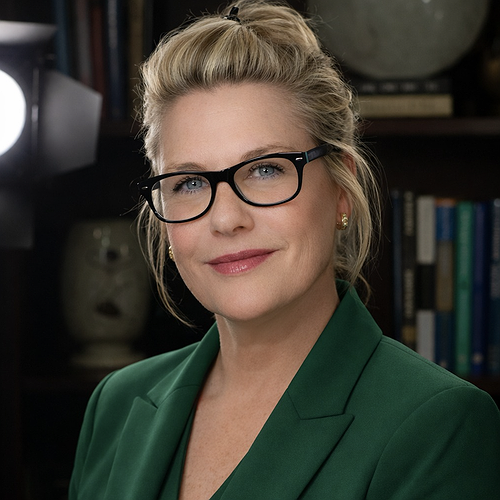
Picture of Lynne Kenney

Dr. Lynne Kenney is a pediatric psychologist on the Language & Cognition Team at the Wellington-Alexander Center for the Treatment of Dyslexia in Scottsdale, Arizona. She completed advanced fellowship training in developmental pediatric psychology and forensic psychology at Massachusetts General Hospital/Harvard Medical School and Harbor-UCLA/UCLA Medical School.

For more than 25 years, Dr. Kenney has developed curriculum, programming, and activities that strengthen children's cognition through rhythmic cognitive-motor movement, executive function skill-building, and social-relational learning. Her work focuses on students in grades K–6. It translates research on the brain-body connection into practical tools for classrooms, clinics, and homes.

Her recent innovations include Cognitivities™, a collection of portable Roll-Out Activities® mats launched with Fit and Fun Playscapes in 2024. The mats combine music, art, and movement to help children practice cognitive skills, executive function, and self-regulation. In 2025, she released a set of original executive function songs for classrooms on Apple Music. She wrote the lyrics, which carry the same cognitive and social-relational lessons she teaches in schools worldwide.

Dr. Kenney is an international educator, researcher, and author. Her books include Move More, Learn More! Harnessing the Brain–Body Connection in Early Childhood (Kuczala & Kenney, 2026), Brain Primers (Kuczala & Kenney, 2020), 70 Play Activities for Better Thinking, Self-Regulation, Learning and Behavior (Kenney & Comizio, 2016), and Bloom: 50 Things to Say, Think and Do with Anxious, Angry and Over-the-Top Kids (Kenney & Young, 2015). She also created the social-emotional literacy program Bloom Your Room™ and Musical Thinking™.

Dr. Kenney is committed to improving the learning trajectories of children in high-need, under-resourced communities. She places particular value on her work with Title I schools. Since 1985, she has served as an educator in community service with organizations including the Neurological Health Foundation, Head Start, Understood.org, HandsOn Phoenix, SparkPE, First Nations communities in Canada, and Points of Light (Generation On).

More →

Learning objectives

  1. Implement research-based activities educators, teachers, and school psychologists can use to improve thinking, self-regulation, and behavior.
  2. Describe the relationship between cognition and motor movement.
  3. Implement activities to help students calm their defensive brains, leading to better concentration, improved attention, and competent social-relational skills.
  4. Apply “Brain Lessons” to increase the efficacy of self-coaching executive function skills.

Learning material

A theoretical course illustrated with clinical examples. This course consists of videos of 5 to 15 minutes each. The course PowerPoint is available for download.

Syllabus

  • PowerPoint
  • 1. Introduction
  • Foundations

  • 2. Today's Landscape
  • 3. The Magic Is Engagement
  • 4. Treatment Model
  • 5. Disappearing Beats
  • 6. The Developmental Pillars Part I
  • 7. The Developmental Pillars Part II
  • 8. The ACTIONS
  • 9. We Are Musical
  • Executive Function: Brain & Skill-Building

  • 10. The Importance of Executive Function
  • 11. Your Frontal Lobes
  • 12. Brain Lessons
  • 13. Movement Snack
  • 14. Big Ball Work
  • 15. Metacognition
  • 16. Attention
  • 17. Movimals
  • 18. CogniBall
  • 19. Equipment Examples
  • 20. Working Memory
  • 21. Cat Dog Activity
  • Self-Regulation & Integration

  • 22. Self-Regulation
  • 23. Co-Regulate with Rhythmic Movement
  • 24. The Space Between the Urge and the Action
  • 25. COGNITAP
  • 26. Conclusion
  • Bibliography


Audience

This course is intended for all mental health professionals.

Registration

Launch discount until November 18

  • 2h30 of continuing education
  • 26 lessons that last from 5 to 15 minutes each
  • 1 PowerPoint
  • 1 bibliography
  • 1 final evaluation
  • 1 certificate of completion
  • 7-day money back guarantee
  • Unlimited access

Legal notice

The courses offered by ASADIS are accredited by different professional organisations. In addition, ASADIS is approved by the Canadian Psychological Association to offer continuing education for psychologists. ASADIS maintains responsibility for the program.

The CPA’s approval of an individual, group, or organization as a CE Sponsor or Provider is restricted to the activities described in the approved application or annual report form. The CPA’s approval does not extend to any other CE activity the Sponsor or Provider might offer. In granting its approval, the CPA assumes no legal or financial obligations to Sponsors, Providers, or to those individuals who might participate in a Sponsor or Provider’s CE activities or programs. Further, responsibility for the content, provision, and delivery of any CE activity approved by the CPA remains that of the CE Sponsor or Provider. The CPA disclaims all legal liability associated with the content, provision, and delivery of the approved CE activity.

Want to know when new courses are available?

Sign up to our mailing list →


Upon joining, you'll receive a 25% welcome promo code, and you can always unsubscribe at any time!


Find us on: LinkedIn   Facebook   Instagram