A Neuro-cognitive Update on the Understanding of Anxiety Disorders

Dr. Marwa Azab, Professional Counselor, Professor & Neuroscientist

Overview

Clinicians are increasingly encountering clients with chronic, uncontrollable worry that is amplified by rising levels of real-world uncertainty and a declining tolerance for it. Many patients with generalized anxiety disorder (GAD) present with persistent cognitive distress, emotional dysregulation, and difficulty making decisions under ambiguity. These patterns are further compounded by attentional biases to threat, impaired cognitive control, and emerging evidence linking chronic anxiety to accelerated cognitive decline. 
This workshop equips clinicians with an updated and neuroscience-informed framework to better understand and treat GAD. Participants will learn to identify and target intolerance of uncertainty, maladaptive metacognitive beliefs about worry, and emotion dysregulation processes that maintain anxiety. The training will introduce practical, actionable strategies to shift worry from abstract verbal processing to more adaptive forms, increase tolerance for uncertainty, and improve emotional regulation. Clinicians will also learn how to conceptualize anxiety within modern, 21st-century stress contexts and apply interventions that align with current research. 

Download the program

  • 2h30 of continuing education
  • 22 lessons that last from 5 to 15 minutes each
  • 1 PowerPoint
  • 1 bibliography (APA)
  • 1 final evaluation
  • 1 certificate of completion
  • 7-day money back guarantee
  • Unlimited access

About the expert

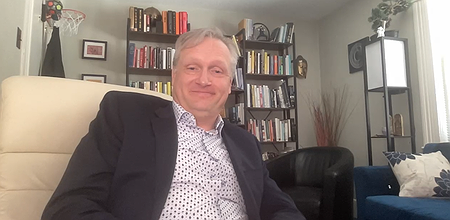
Picture of Marwa Azab
Dr. Marwa Azab is a neuroscientist, licensed professional counselor, and professor known for making cutting-edge neuroscience accessible, practical, and relevant to everyday life. She specializes in the science of uncertainty, stress, emotion, anxiety and interoception in the context of modern, 21st-century stressors.

She holds a Ph.D. in Neuroscience and an M.A. in Clinical Psychology, and teaches at California State University, Long Beach and Stanford University’s Continuing Studies program.

Dr. Azab is the author of the textbook An Update on Anxiety Disorders: Etiological, Cognitive & Neuroscientific Aspects and writes the Psychology Today blog “Neuroscience in Everyday Life.”  (read by over 1.5 million people). She also shares research-backed, jargon-free insights with a broad audience on Instagram, TikTok, and LinkedIn @DrMarwaAzab.

Her work has been featured on ABC, NBC, NPR, BBC, and Vogue, and she is a TED speaker.

More →

Learning objectives

  1. Differentiate between adaptive worry and pathological worry
  2. Identify at least three cognitive mechanisms that maintain chronic worry in generalized anxiety disorder
  3. Identify positive and negative beliefs about worry and explain how they contribute to the maintenance of GAD
  4. Explain how intolerance of uncertainty influences emotions and their regulation in GAD clients; Explain how elevated anxiety symptoms contribute to accelerated cognitive decline

Learning material

A theoretical course illustrated with clinical examples. This course consists of videos of 5 to 15 minutes each. The course PowerPoint is available for download.

Syllabus

  • PowerPoint
  • 1. Introduction
  • Understanding GAD

  • 2. Anxiety
  • 3. Generalized Anxiety Disorder
  • 4. High Worriers vs GAD Patients vs Other Anxiety Patients
  • 5. Worry
  • 6. Positive Beliefs About Worry
  • 7. Poor Problem Orientation
  • Cognitive Vulnerabilities and Maintaining Mechanisms

  • 8. GAD and Intolerance of Uncertainty
  • 9. IU Biases Emotional Experience
  • 10. Is IU a Cognitive Vulnerability Specific to GAD?
  • 11. Waiting Well
  • 12. Negative Beliefs about Worry
  • 13. Chronic Worry Protects Against Abrupt Shifts
  • 14. Attentional Bias, Cognitive Control, and Threat Controllability
  • Etiology and Biology

  • 15. Etiological Factors: Genetics
  • 16. Genetic Factors
  • 17. Environmental & Developmental Factors
  • 18. Anxiety and Stress
  • 19. Nervous System Activation and the HPA Axis
  • 20. Chronic Stress and Hippocampal Damage
  • 21. Brain and GAD
  • 22. Conclusion
  • Bibliography


CE Credits

Download a certificate of successful completion.


Audience

This course is intended for all mental health professionals.

Registration

  • 2h30 of continuing education
  • 22 lessons that last from 5 to 15 minutes each
  • 1 PowerPoint
  • 1 bibliography (APA)
  • 1 final evaluation
  • 1 certificate of completion
  • 7-day money back guarantee
  • Unlimited access

Legal notice

The courses offered by ASADIS are accredited by different professional organisations. In addition, ASADIS is approved by the Canadian Psychological Association to offer continuing education for psychologists. ASADIS maintains responsibility for the program.

The CPA’s approval of an individual, group, or organization as a CE Sponsor or Provider is restricted to the activities described in the approved application or annual report form. The CPA’s approval does not extend to any other CE activity the Sponsor or Provider might offer. In granting its approval, the CPA assumes no legal or financial obligations to Sponsors, Providers, or to those individuals who might participate in a Sponsor or Provider’s CE activities or programs. Further, responsibility for the content, provision, and delivery of any CE activity approved by the CPA remains that of the CE Sponsor or Provider. The CPA disclaims all legal liability associated with the content, provision, and delivery of the approved CE activity.

Want to know when new courses are available?

Sign up to our mailing list →


Upon joining, you'll receive a 25% welcome promo code, and you can always unsubscribe at any time!


Find us on: LinkedIn   Facebook   Instagram