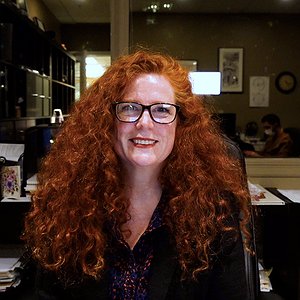
Dr. Mari Swingle, psychotherapist, clinical researcher, author, educator, and public speaker.
She has a MA in Education and an MA and PhD in Clinical Psychology, and has been working in the field of Applied Psychoneurophysiology / Neurotherapy for over 25 years. She is a BCIA Certified Mentor who was BCN /EEG certified in Neurofeedback in 2000, was awarded Associate Fellow status in 2005, Fellow in 2010, and Senior Fellow in 2017.
She sat on the Board of Directors of Association for Applied Psychophysiology and Biofeedback (2017-19), wherein her primary mandate was constructing a classification system for Neurofeedback Proficiency Standards for the American Psychological Association (APA). She was awarded AAPB Fellowship in 2020. Dr. Mari Swingle is a champion of Neurotherapy, continuously contributing to the advancement of research and practice on which she presents regularly at professional conferences. She is dedicated not only to the advancement of clinical treatment but to disseminating professional and lay understanding of what Neurotherapy/EEG BrainBiofeedback is, and equally, what it is not.
Centres d'intérêts
- Neurothérapie et neurofeedback clinique
- Neuropsychologie du comportement et des dépendances technologiques
- Développement cognitif et santé mentale chez les enfants et adolescents
- Impact des technologies numériques sur le cerveau et le comportement
- Intégration de la psychothérapie, de la neurothérapie et de la recherche appliquée
Présence sur internet
Dr Mari K. Swingle
Swingle Clinic
Mari Swingle – Fostering Health & Happiness in the Digital Age
Mari Swingle - Swingle Clinic
Quelques publications
- Swingle, M. (2021). Neurofeedback, where are we and where are we going? Three critical issues for consideration: Perspective from 25 years of practice. Biofeedback, 49(3), 59–70. https://doi.org/10.5298/1081-5937-49.3.04
- Swingle, M. (2015). Beyond the self in self-regulation—Reaching beyond technologies: The importance of others and relationships to individual well-being. Biofeedback, 43(4), 158–162. https://doi.org/10.5298/1081-5937-43.4.02
- Swingle, M. K. (2014). i-Minds: How cell phones, computers, gaming, and social media are changing our brains, our behavior, and the evolution of our species (1st ed.). New Society Publishers.
- Swingle, M. K. (2019). i-Minds: How and why constant connectivity is rewiring our brains and what to do about it (2nd ed.). New Society Publishers.
Affiliations
- Neurothérapeute agréée et psychologue clinicienne, Swingle Clinic, Vancouver, C.-B.
- Chercheure et conférencière internationale en neurofeedback et dépendances technologiques
- Membre, Association for Applied Psychophysiology and Biofeedback (AAPB)
Exploring science, skill & practice needs: Neurotherapy is a burgeoning field of practice