- Identify verbal and nonverbal communication patterns commonly seen in trauma survivors, including paralinguistic markers
- Analyze the role of humor and other coping strategies in trauma narratives
- Assess the impact of the therapist’s affect on the processing of trauma narratives and therapeutic outcomes
Beyond Verbal Disclosure: Identifying Trauma in Voice and Body
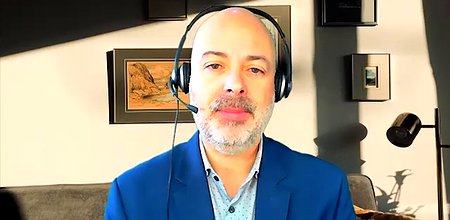
Dr. Corey Petersen, Psychotherapist
Master trauma assessment through voice, body, and paralinguistic markers that reveal what words cannot express.
Overview
A client can describe severe trauma with complete composure, use humor to deflect pain, or intellectualize abuse without accessing emotion. Standard verbal disclosure often masks rather than reveals the depth of traumatic impact. What survivors don't say—and how they say what they do—frequently carries more clinical information than the content itself.
In this course, you will learn to identify trauma through paralinguistic and nonverbal channels that operate beneath conscious awareness. You will develop precision in tracking vocal markers, body signals, and communication patterns that reveal autonomic nervous system states before coherent narratives emerge.
You will deepen your understanding of how trauma reshapes communication across multiple dimensions:
- Paralinguistic indicators: pitch shifts, vocal constriction, disfluencies, breath patterns
- Nonverbal trauma markers: microexpressions, postural collapse, freeze responses, eye contact patterns
- Linguistic coping strategies: numbing, intellectualization, alexithymia, humor functions
- Autonomic expression and suppression: sympathetic arousal and dorsal vagal shutdown signatures
You will strengthen your capacity to assess when silence signals containment versus withdrawal. You will learn to recognize "speechless terror" as a neurobiological response rather than resistance. You will integrate communication science frameworks with polyvagal theory to inform case conceptualization and treatment planning.
The training will guide you through identifying disfluencies as emotional data points, tracking repetition as self-regulation, and reading vocal quality as a window into nervous system activation. You will explore how your own vocal presence, movement, and affect regulation influence client safety and disclosure capacity.
These refined observational skills will enhance your clinical precision in trauma assessment. You will exit with concrete markers to track in session, expanded attunement capacity, and evidence-based tools for recognizing implicit trauma signals that standard talk-based approaches miss.
- 3h of continuing education
- 27 lessons that last from 5 to 15 minutes each
- 1 certificate of achievement
- 1 PowerPoint
- 1 bibliography
- 1 final evaluation
- 7-day money back guarantee
- Unlimited access
- 97% of participants who completed the satisfaction survey declare they would recommend this course to a colleague
Accreditation

Ordre des Psychologues du Québec
Canadian Psychological Association

Canadian Counselling and Psychotherapy Association

Collège des médecins du Québec
For physicians who practice psychotherapy, training recognized by the Ordre des psychologues du Québec is automatically considered as activities adopted by the Collège des médecins, in accordance with Article 3 of the Regulation.
For physicians who do not practice psychotherapy, the College evaluates each recognition request based on the following criteria:
- the relevance of the activity to the practice of the profession
- the skills and experience of the trainer
- the quality of the content and its adequacy with the physician's practice
- the pedagogical framework of the activity
- the quality of the documentation provided
- compliance with the training objectives set out in the regulation
- the presence of a certificate of participation or an evaluation
About the expert

Dr. Corey Petersen is a clinical psychotherapist who brings a distinctive lens to trauma-informed practice through her dual expertise in psychotherapy and communication science. She earned her Ph.D. in Communication Studies from the University of Kansas, where her research focused on psychotherapeutic language and communication ethics, alongside dual Master's degrees in Marriage and Family Therapy and Professional Communication.
Dr. Petersen's clinical work centers on helping survivors of trauma, with particular expertise in identifying implicit trauma markers through paralinguistic and nonverbal assessment. Her integration of communication theory with therapeutic practice allows her to train clinicians in recognizing what clients communicate beyond their words—through voice quality, body signals, and linguistic patterns that reveal autonomic nervous system states.
As owner of Communication and Connection Therapy, Dr. Petersen maintains an active clinical practice while serving as a continuing education trainer and corporate communication consultant. With over nine years of collegiate teaching experience spanning communication and psychology departments, she excels at translating complex research into immediately applicable clinical skills. Her published research and training programs bridge neuroscience, polyvagal theory, and communication science to enhance clinicians' observational precision in trauma assessment.
Dr. Petersen is recognized for making sophisticated theoretical frameworks accessible to practicing clinicians, helping mental health professionals develop refined attunement capacities that standard verbal-focused training often overlooks.
Learning objectives
Learning material
A theoretical course illustrated with clinical examples. This course is composed of videos lasting 5 to 15 minutes each. The training PowerPoint is available for download.
Syllabus
- PowerPoint
- 1. Introduction
-
The Basics: Communication Styles, Patterns, and Theory
- 2. Communication Theory
- 3. Communication Styles
- 4. Communication Patterns
- 5. Language, Meaning, and Culture
-
Trauma’s Impact on Communication
- 6. How Trauma Shapes Communication and Perception
- 7. The Limits of Talking about Trauma
- 8. Autonomic Expression and Suppression
- 9. Linguistic Numbing and Dissociation
-
Paralinguistic Trauma Markers
- 10. Paralinguistic Indicators of Trauma
- 11. Auditory Overwhelm and Pitch
- 12. Disfluencies and Repetition as Data
- 13. Speechless Terror and Silence as Containment
-
Nonverbal Behavior Trauma Markers
- 14. Universal Facial Expression and Nonverbal Behavior Trauma Markers
- 15. Nonverbal Body Behavior
- 16. Linguistic Shifts- Humor and Coping
- 17. Linguistic Shifts and Displacement
- 18. “Good Client” Politeness and Minimization
-
Therapist Attunement in Trauma Processing
- 19. Therapist Affect
- 20. Embodied Witnessing
- 21. Affective Co-Regulation and Building Affective Competence
- 22. Active Listening
- 23. Affect Presence and Culture
- 24. Repair and Reconnection
- 25. Assessing Trauma Cues
- 26. Ethics in Trauma Practice
- 27. Conclusion
- Bibliography
CE Credits
Download a certificate of successful completion.
Audience
This course is intended for all mental-health experts
Registration
Ask a question
Do you have a question? Then email us at contact@asadis.net
Frequently asked questions
-
Is there an evaluation at the end of the course?
To validate the achievement of the learning objectives, a final evaluation in the form of true/false questions is required. It must be completed in order to obtain the certificate of completion.
In addition, an optional self-assessment is offered at the beginning and end of the course, allowing you to measure your progress on the targeted skills.
These evaluations are not graded and are intended primarily to support your professional reflection.
-
I have a disability. Can I receive specific support?
Yes! This training is offered as a pre-recorded video format, without subtitles. If you have a disability, we can provide an adapted alternative (technical assistance for viewing or individual supervision). For any request, please contact our disability coordinator at the following address: contact@asadis.net
-
How long do I have access to the course?
After your registration, the course is accessible anytime and from anywhere with unlimited access.
-
When does the course start?
That is entirely up to you! When you buy a course, you'll receive an access link that you can activate when you want.
-
Is there a student rate?
Yes there is! To learn more, email us at contact@asadis.net.
You may also be interested in:


Legal notice
The courses offered by ASADIS are accredited by different professional organisations. In addition, ASADIS is approved by the Canadian Psychological Association to offer continuing education for psychologists. ASADIS maintains responsibility for the program.
The CPA’s approval of an individual, group, or organization as a CE Sponsor or Provider is restricted to the activities described in the approved application or annual report form. The CPA’s approval does not extend to any other CE activity the Sponsor or Provider might offer. In granting its approval, the CPA assumes no legal or financial obligations to Sponsors, Providers, or to those individuals who might participate in a Sponsor or Provider’s CE activities or programs. Further, responsibility for the content, provision, and delivery of any CE activity approved by the CPA remains that of the CE Sponsor or Provider. The CPA disclaims all legal liability associated with the content, provision, and delivery of the approved CE activity.